The short answer
For most Springfield-area homes with an attached garage, the best value is a three-layer insulated steel door: steel on both faces with foam between. It is stiff and quiet, and small dents are rare. Polystyrene insulation gives roughly R-6 to R-9. Polyurethane gives R-12 to R-18 in the same thickness. Expect $1,500 to $3,700 installed for a 16x7 insulated door in general market terms. A single-layer non-insulated door at $800 to $1,800 is reasonable for a detached, unheated garage.
Updated . General information for the Springfield, MO area. Prices are typical market ranges, not a quote.
1. Size and headroom
Standard widths are 8 and 9 feet for a single and 16 feet for a double, with 18 feet on some newer homes. Standard heights are 7 and 8 feet. A door in a standard size costs less and arrives sooner than a custom one.
Measure three things: the width of the opening, the height, and the headroom from the top of the opening to the ceiling or the lowest obstruction. Standard track with a torsion spring needs about 12 inches of headroom. With less, the installer uses low-headroom track, which works but adds cost. Older detached garages in central Springfield are the usual place this comes up.
2. Construction: one, two or three layers
| Type | What it is | Good for |
|---|---|---|
| Single-layer | What it isOne stamped steel skin. Hollow back. | Good forDetached, unheated garages. Lowest price. |
| Two-layer | What it isSteel skin with foam board and a vinyl backer. | Good forSome insulation and less noise on a budget. |
| Three-layer | What it isFoam sandwiched between two steel skins. | Good forAttached garages. Stiffest and quietest. |
The construction matters more than the steel gauge. Gauge numbers run backward, so 24-gauge is thicker than 27-gauge. Common residential doors use 24, 25 or 27. A single-layer 24-gauge door still dents more easily than a three-layer door with 27-gauge skins, because the bonded foam core turns the two skins into one rigid panel. Ask for the construction first and the gauge second.
3. Insulation and R-value
Two kinds of foam are used. Polystyrene is a rigid white board cut to fit inside the section. It typically gives R-6 to R-9. Polyurethane is injected as a liquid and expands to fill the section, bonding to both skins. It reaches about R-12 to R-18 in a standard two-inch door and makes the stiffest panel.
R-values are calculated for each model, and makers do not all measure the same way. Compare the published figure for the exact model, and remember that the number describes the center of a section. The joints, windows and perimeter seals leak more than the panel does.
Is it worth it here? With January lows averaging about 24 degrees and July highs near 90, an attached garage with an uninsulated door runs close to outdoor temperature year-round. If there is a bedroom over the garage or a door from the garage into the kitchen, you feel that. For those houses the step from non-insulated to polystyrene pays back in comfort. The step from polystyrene to polyurethane is a smaller gain and is mostly worth it if you heat or cool the garage or work in it.
4. Style, color and windows
- Raised panel. The familiar grid of rectangles. Least expensive and suits nearly any house.
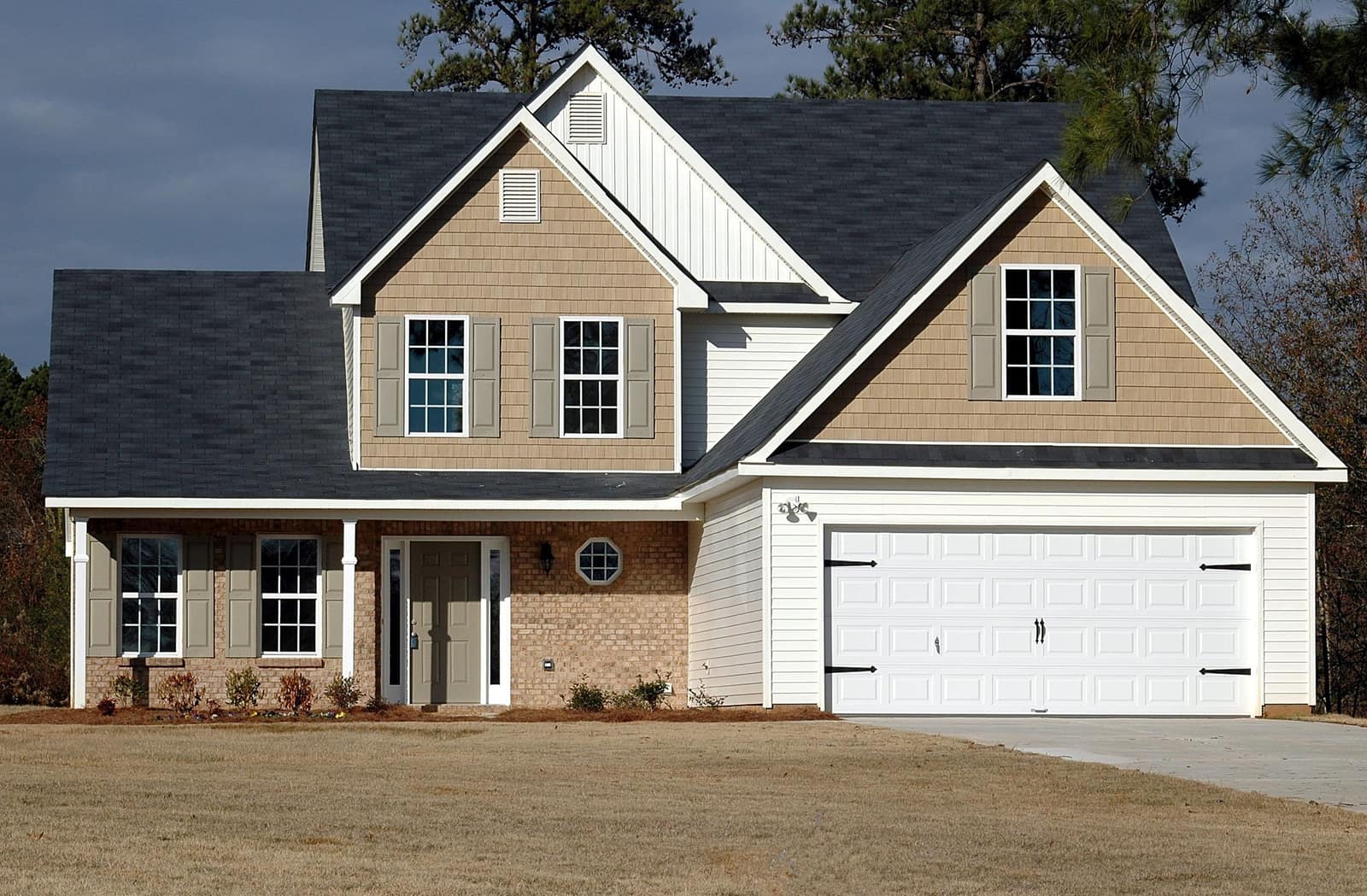
- Carriage house. Styled to look like swinging barn doors, with trim boards and decorative hardware. Common on newer homes around Nixa and Ozark.
- Flush or modern. Flat or lightly grooved sections, sometimes with a column of glass down one side.
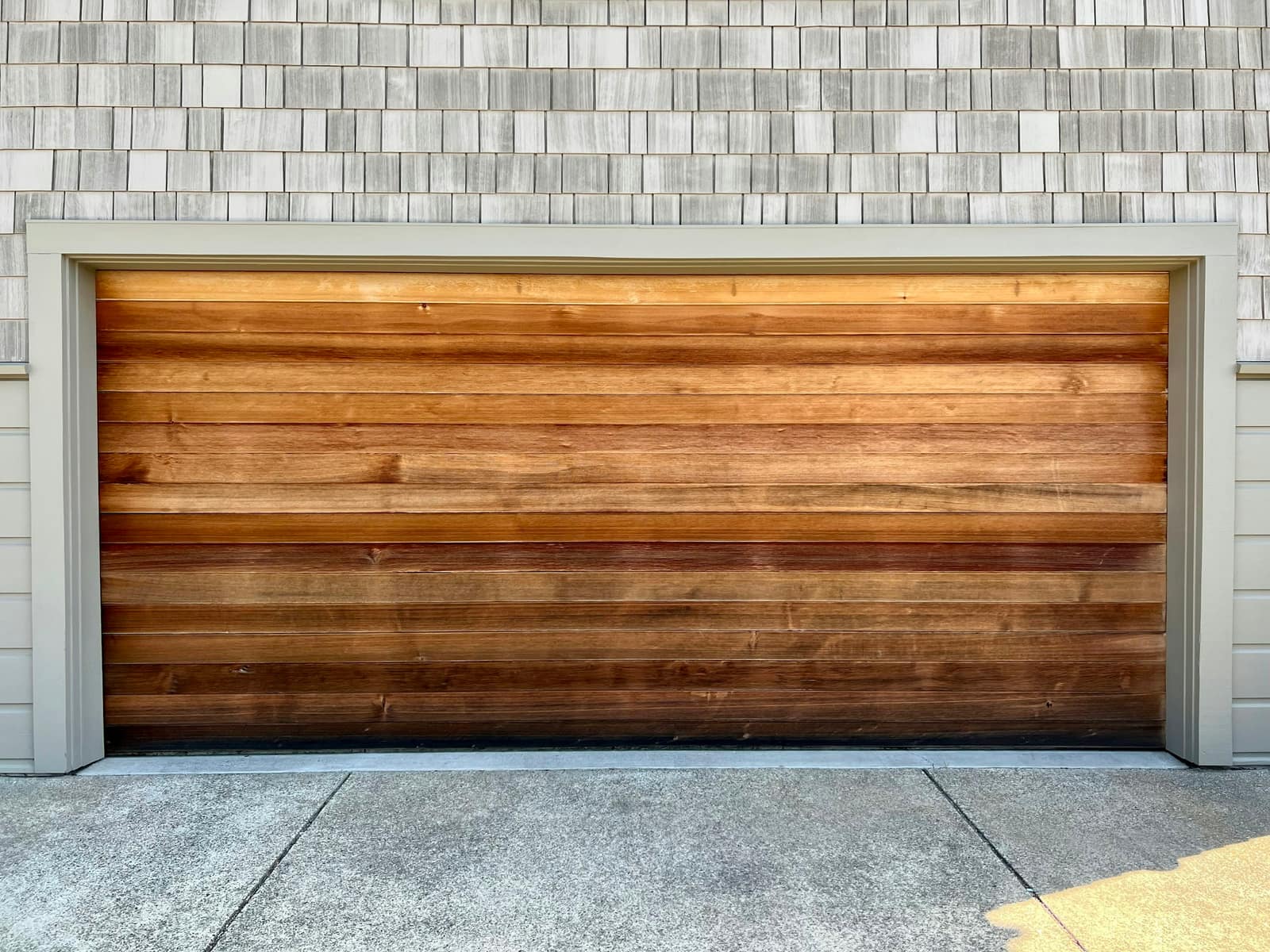
- Wood look. A printed or embossed wood-grain finish on steel. It gives the appearance without the yearly upkeep real wood needs in this humidity.
White and almond cost the least. Factory colors and wood tones add to the price. Dark colors on a west-facing door get hot in July and can show fading sooner.
Windows bring daylight into a garage that has none, and they change the look of the house. They also cost more, reduce insulation where they sit, and let people see whether a car is home. Insulated or frosted glass in the top section answers most of those concerns. If you live in a subdivision with an HOA, check its rules before choosing a style.
5. The hardware that comes with it
Two quotes for the same door can differ in the parts you do not see. Ask each installer four questions.
- What cycle rating are the springs? The default is 10,000. An upgrade to 20,000 or more costs little when ordered with the door.
- Are the rollers nylon with ball bearings, or plain plastic?
- Is new track included? It should be. Track is matched to the door.
- Does a double door come with a strut on the top section and a reinforcement bracket for the opener?
On an exposed lot, ask about a wind-reinforced version with extra struts and heavier track. Southwest Missouri sees straight-line winds every year. Whether reinforcement is required is a building code matter for your installer to confirm.
What it costs
| Door | Non-insulated | Insulated |
|---|---|---|
| Single, 8x7 or 9x7 | Non-insulated$550 to $1,300 | Insulated$750 to $1,900 |
| Double, 16x7 | Non-insulated$800 to $1,800 | Insulated$1,500 to $3,700 |
Local dealers run seasonal offers on insulated doors, often $100 to $250 off, so it pays to ask. Get at least two written quotes that name the manufacturer, the model, the R-value, the spring cycle rating and what is included. Then you are comparing the same door. More on what a full install covers on the installation page.
Questions
What R-value garage door do I need in Missouri?
For an attached garage, R-6 to R-9 is a clear improvement over a bare steel door and suits most homes. Go to R-12 or higher if the garage is heated or cooled, or if there is living space above it.
Is a thicker steel gauge always better?
No. Construction matters more. A three-layer door with thinner skins is stiffer and more dent-resistant than a single-layer door in thicker steel.
How long does it take to get a new garage door?
Stock sizes and colors can often be installed within about two weeks. Custom colors, windows and unusual sizes are built to order and can take several weeks.
Do I need a permit to replace a garage door in Springfield?
The City of Springfield's guidance says a same-size replacement generally does not need a permit, while changing the size of the opening does. Rules differ in other towns, so have your installer confirm.