First, is the door safe to use?
A dent in the middle of a section is cosmetic. A crease that runs the full width, a section that has pulled away from its hinges, or a door that now catches on the way up is structural. If the door binds or looks twisted, stop using it. A bent section can fold when the opener pulls on it, and the rollers can leave the track.
If the bottom section took the hit, look at the track and the cables too. A hit hard enough to crease steel usually moves the bottom of the track. See off-track repair.
When one section can be replaced
- The door is a current model from a manufacturer that still sells sections for it.
- The damage is limited to one or two sections and the tracks are straight.
- The rest of the door is in decent shape: no rust at the bottom, no cracked sections elsewhere.
The new section has to match in more than color. Panel pattern, thickness, the profile of the tongue-and-groove joint between sections, and the hinge layout all vary by model. That is why the sticker matters. Without it, a tech identifies the door from the joint profile and the stamp pattern.
When it cannot
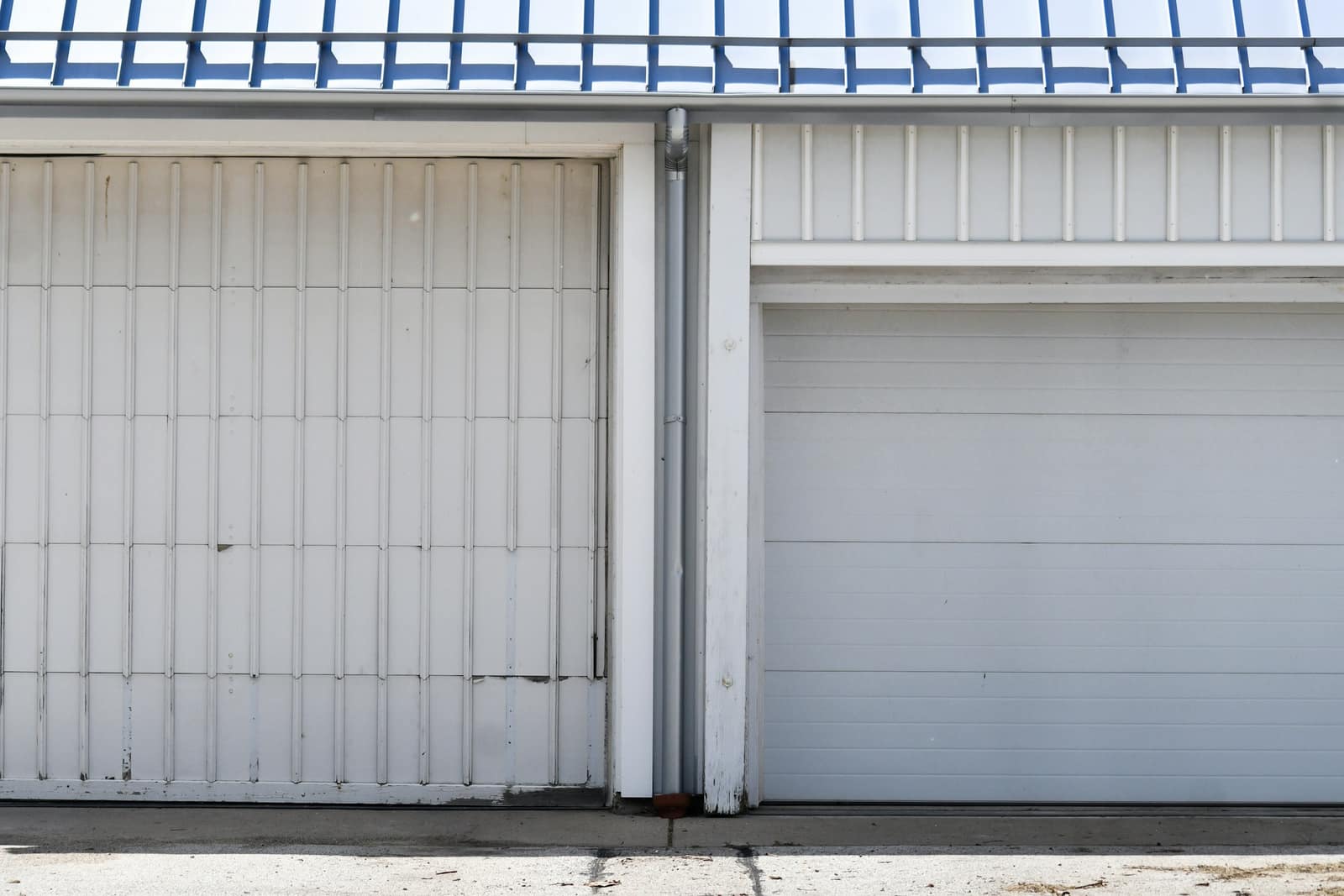
Manufacturers retire models. For a door from the 1990s there is a fair chance the section is no longer made, and nothing else will lock into the old joint. Paint is the other problem. A factory-white section next to fifteen years of sun-faded white will show. On a white door most people live with it or repaint the whole door. On a dark or wood-tone door the mismatch is harder to hide.
The math also changes with the count. One section typically runs $300 to $900 installed. Two sections on a double door can reach half the cost of a new door, and the new door comes with new springs, new hardware and a manufacturer's warranty. The repair or replace guide has a way to work that out.
Dents that do not need a new section
A shallow dent in a non-insulated steel door can sometimes be pushed out from the back, since there is nothing behind the skin. It rarely comes out invisible. On an insulated three-layer door, the foam holds the dent in place and it is there to stay unless the section is replaced.
A top section that has bowed where the opener arm attaches is a different case. That is a fatigue problem, and the fix is a steel strut across the back of the section, with a proper opener bracket. A strut costs far less than a section and should be on most double doors anyway.
Hail and insurance
Hail leaves a pattern of small round dents across the upper sections, and it is easy to miss on a white door in flat light. If a storm sent an adjuster to look at your roof, ask a garage door tech to look at the door too. Adjusters do miss them, and at least one Springfield homeowner has said so in a public review. The tech can write up a replacement quote for you to give your insurer.
Panel replacement: questions
How much does it cost to replace one garage door panel?
National cost surveys put one section at roughly $300 to $900 installed, depending on size, insulation and brand. Sections for double doors and insulated doors are at the upper end. This is a market range, not a quote.
How long does it take to get a matching section?
Common white raised-panel sections are sometimes in stock locally. Most others are ordered from the manufacturer and take from a few days to several weeks.
Can I use the door while I wait for the section?
If the damage is a dent and the door moves freely by hand without catching, generally yes. If the section is creased, loose at a hinge, or the door binds, leave it closed and have a tech brace it.
Will the new panel match the old ones?
The pattern will match if the right model is ordered. The color may be a shade brighter than sun-faded older sections. Repainting the door evens it out.