The short answer
For most attached garages, a belt drive opener with battery backup and built-in Wi-Fi is the right choice. It is quiet and typically costs $330 to $650 installed. A chain drive is the budget pick at $300 to $500 and is fine for a detached garage where noise does not matter. A wall-mount opener, $550 to $950, suits high ceilings, low headroom, or anyone who wants the ceiling clear. Any opener made before 1993 lacks photo eyes and should be replaced.
Updated . General information for the Springfield, MO area. Prices are typical market ranges, not a quote.
The four drive types
| Type | How it moves the door | Noise | Typical installed cost |
|---|---|---|---|
| Chain drive | How it moves the doorA steel chain pulls a trolley along a rail | NoiseLoudest | Typical installed cost$300 to $500 |
| Belt drive | How it moves the doorA reinforced rubber belt replaces the chain | NoiseQuiet | Typical installed cost$330 to $650 |
| Screw or direct drive | How it moves the doorA threaded rod turns, or the motor rides the rail | NoiseModerate to quiet | Typical installed cost$450 to $800 |
| Wall-mount (jackshaft) | How it moves the doorMotor beside the door turns the spring shaft | NoiseVery quiet | Typical installed cost$550 to $950 |
Chain drive. The old standard. It is inexpensive and strong, and it is noisy. The chain needs its tension checked now and then. In a detached garage nobody will care. Under a bedroom, everybody will.
Belt drive. Mechanically the same as a chain drive with a belt in place of the chain. The difference in sound is large. Belts used to be thought weaker, and current steel-reinforced belts handle any normal residential door.
Screw and direct drive. Fewer moving parts. Screw drives are quick and were popular in the 1990s. They can be noisy in temperature swings if they are not lubricated. Direct drive units, where the motor itself travels along a fixed chain, are very quiet and less common.
Wall-mount. The trade name is jackshaft. The unit bolts to the wall beside the door and turns the torsion shaft directly, so there is no rail across the ceiling. It needs a torsion spring system and a little wall space to one side. It is the answer for a garage with a lift, overhead storage, a tall shop door, or a ceiling too low for a rail.
Horsepower
The springs lift the door. The opener only moves a balanced load, so power matters less than the box suggests. A half horsepower unit is usually enough for a standard steel double door. Step up to three-quarter horsepower, or the DC equivalent that makers label in their own units, for solid wood doors, oversized insulated doors and 8-foot-tall doors. A bigger motor will not fix a door that is heavy because its springs are worn. Fix the springs.
Safety and security features
- Photo eyes. Required by federal rule on openers manufactured since January 1, 1993. They mount within six inches of the floor and reverse a closing door if the beam is broken.
- Auto-reverse. Openers made since 1991 must also reverse on contact with an obstruction. Test it with a 2x4 laid flat under the door.
- Rolling code. Remotes from the early 1990s and before send the same code every time, and it can be captured and replayed. Rolling code, introduced by the major brands in the mid-1990s, sends a new code on each press.
- Manual release. The red cord. Every opener has one, and every adult in the house should know how to use it.
If your opener has no photo eyes or the remote has a row of tiny switches inside it, the unit is over thirty years old. Replace it.
Battery backup
A backup battery runs the opener when the power is out, typically for a couple of dozen cycles. California requires one on new openers. Missouri does not.
It earns its place in the Ozarks. The January 2007 ice storm left about 200,000 people in southwest Missouri without power, some for more than a week. The April 2025 wind storm was the worst outage event in Springfield since. If anyone in the house would struggle to lift the door by hand, or the garage is the only practical way out with a car, get the battery. Plan on replacing it every two to three years, and listen for the beep that means it is low.
What a smart opener does
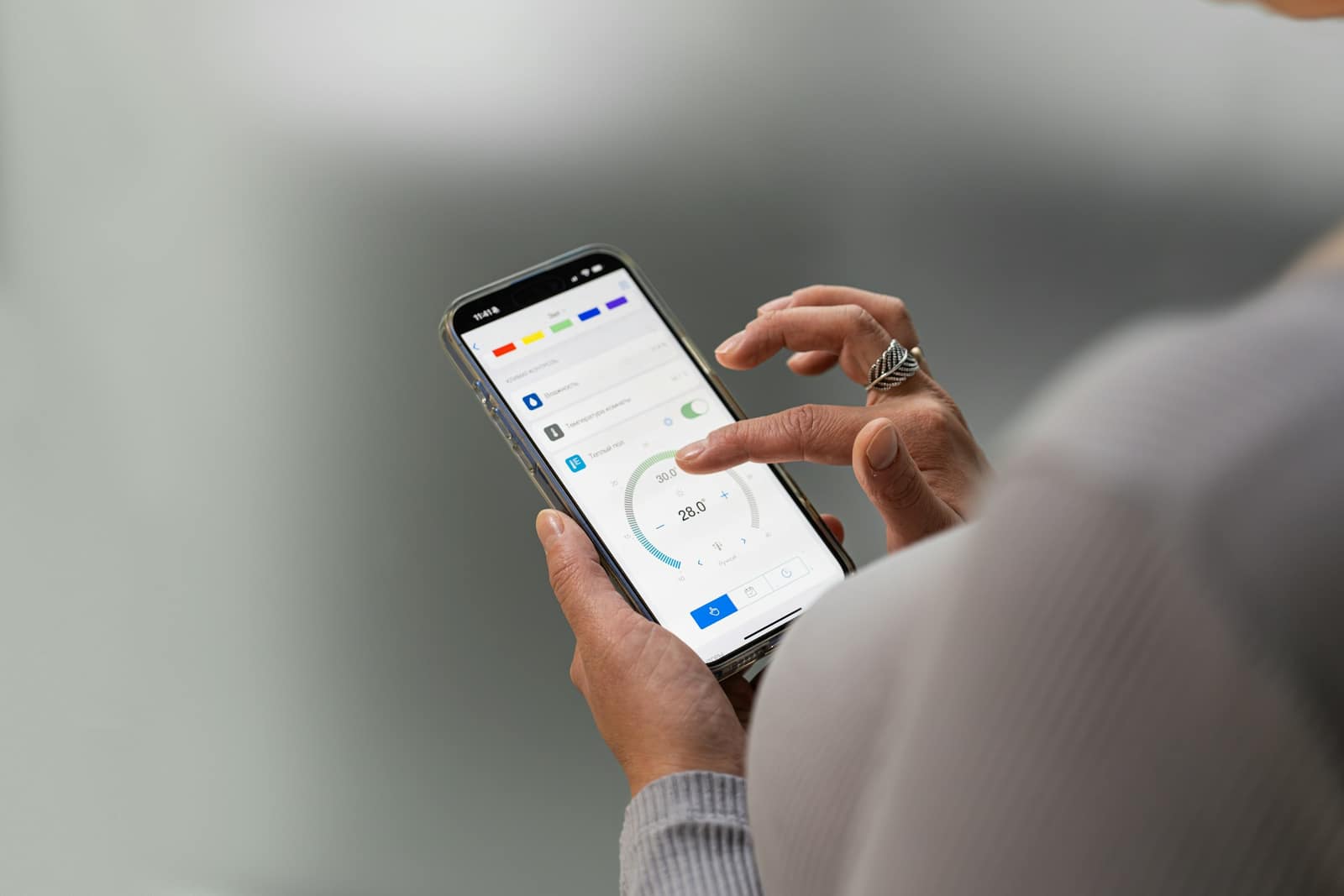
Most openers sold today have Wi-Fi built in and pair with a phone app. The useful features are few and practical.
- An alert when the door opens, and a reminder if it has been left open.
- Closing the door from anywhere. This settles the question of whether you shut it after you are already on the highway.
- A schedule that closes the door every night at a set time.
- Temporary access for a delivery, a house sitter or a rental guest.
- A log of when the door opened and closed.
You do not need a new opener to get most of this. Add-on Wi-Fi controllers work with most openers made since the mid-1990s that have photo eyes. Ask the tech whether your model is compatible before buying one.
A wireless keypad outside the door is the low-tech version, and it is still the most useful accessory for a household with kids. No phone or remote is needed, only a four-digit code.
What a proper installation includes
- A check of the door first. It should lift by hand and hold at half open. A new opener on an unbalanced door will fail early.
- The old unit taken down and hauled away.
- New photo eyes and new wall wiring. Old sensors should not be reused.
- A reinforcement bracket on the top door section where the arm attaches.
- Travel limits and force set, then the photo eye and reversal tests done in front of you.
- Remotes, keypad and phone app set up before the installer leaves.
If the garage has no outlet in the ceiling near the opener, adding one is electrical work and may need a permit. Mention it when you ask for a price. Details on repair against replacement are on the opener repair page.
Questions
What is the quietest type of garage door opener?
Wall-mount and belt drive openers are the quietest. For a garage under a bedroom, either one is a large improvement over a chain drive. Nylon rollers on the door help as much as the opener does.
How long does a garage door opener last?
Ten to fifteen years is typical. Many run longer, but parts get scarce and older units lack current safety and security features.
Can I add Wi-Fi to my existing opener?
Usually, if it was made after the mid-1990s and has photo eyes. Add-on controllers connect to the opener and your home Wi-Fi. Check compatibility for your brand and model first.
Is battery backup worth it in Springfield, MO?
For most households, yes. The Springfield area has had two major outage events since 2007, and a battery adds little to the cost of a new opener.