What a real tune-up covers
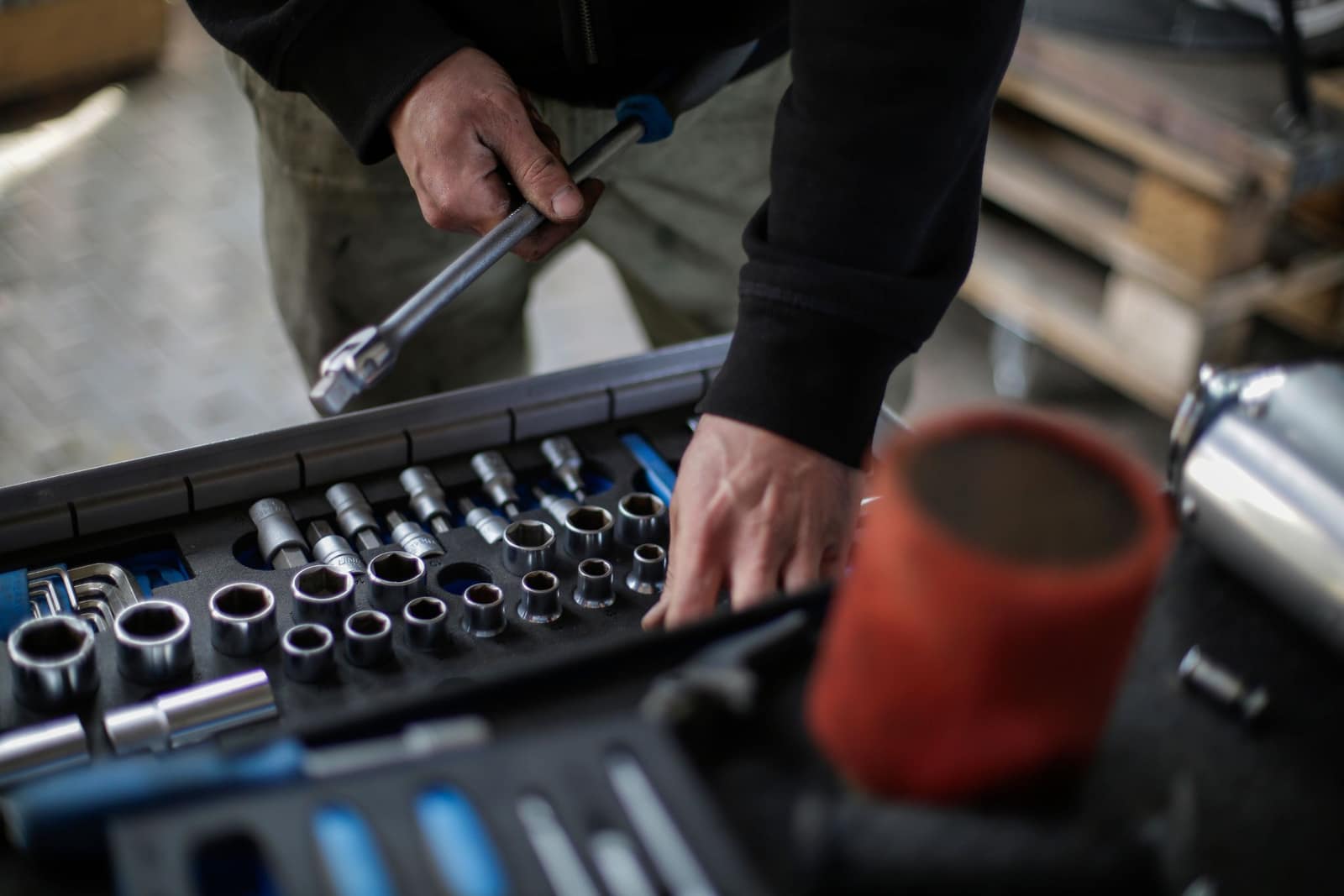
- Hardware. Hinge bolts, track brackets and the opener's mounting hardware all loosen with vibration. Each one gets checked and snugged.
- Lubrication. Rollers, hinges, the spring coils, the end bearings and the center bearing get a garage door lubricant. The tracks themselves are wiped clean, not greased.
- Rollers. Each one is spun and checked for wobble and cracked wheels.
- Cables. A look at both cables near the bottom bracket, where fraying starts.
- Springs and balance. With the opener disconnected, the door is raised halfway and let go. It should stay. A door that drops has a tired spring.
- Opener. Chain or belt tension, travel limits, force settings, and the gear housing on older chain drives.
- Safety devices. The photo eye test and the reversal test, described below.
- Weather seal. The bottom seal and the side seals, checked for gaps and cracking.
On a door in fair shape this takes 30 to 45 minutes. You should come away with a short list of what is worn now and what can wait a year.
Two safety tests you can run today
- Photo eye test. Start the door closing and wave a broom handle through the beam near the floor. The door should stop and go back up at once.
- Reversal test. Lay a 2x4 flat on the floor in the middle of the opening and close the door on it. The door should touch the board and reverse. If it keeps pushing, the opener's down force is set too high or the opener is too old to have the feature.
If the door fails either test, stop using the opener for automatic closing until it is fixed. Both tests take two minutes and are worth doing every month or two, more so with small children or pets in the house.
What you can do yourself
Twice a year, spray the roller bearings, the hinges and the spring coils with a silicone or lithium garage door lubricant. Skip the standard penetrating spray in the blue and yellow can. It is a solvent and it washes the grease out. Wipe the photo eye lenses. Tighten any hinge bolts you can reach with a socket, except the ones on the bottom brackets, which stay alone because the cables hook to them.
That covers about half of a tune-up. The other half, meaning the balance check, the spring adjustment and the cable inspection, is the part worth paying for.
What it typically costs, and the coupon problem
A tune-up typically runs $80 to $250 in national cost surveys. Around Springfield you will see specials well under $100, sometimes covering more than one door. A low price can be an honest way for a company to meet new customers.
It can also be bait. The pattern homeowners describe goes like this: a $29 or $39 tune-up, a tech who spends ten minutes at the door, then a quote for $1,000 or more in springs, rollers and bearings that are about to fail. A local homeowner described being pitched a $500 package when the door needed a bottom seal and a chain put back on.
Tune-up: questions
How often does a garage door need a tune-up?
Once a year is the usual advice for a door that gets daily use. A lightly used door on a detached garage can go two years.
What lubricant should I use on a garage door?
A silicone or white lithium spray sold for garage doors. Put it on the roller bearings, hinges and springs. Do not grease the tracks, because grease there collects grit and makes the rollers slide.
My door is loud. Will a tune-up fix it?
Often. Most noise comes from dry hinges, worn rollers and loose hardware. If the opener is a chain drive bolted under a bedroom, some of the noise is the opener and only a belt drive will change that.
Does a tune-up include adjusting the springs?
It should include checking the balance, and a small spring adjustment if the door is slightly heavy. Replacing springs is a separate job with its own price.